Registration is open for the 19th annual Mat-Su Salmon Science and Conservation Symposium! Join us November 19 and 20, 2026 at the Palmer Depot in Palmer, Alaska (610 S. Valley Way).
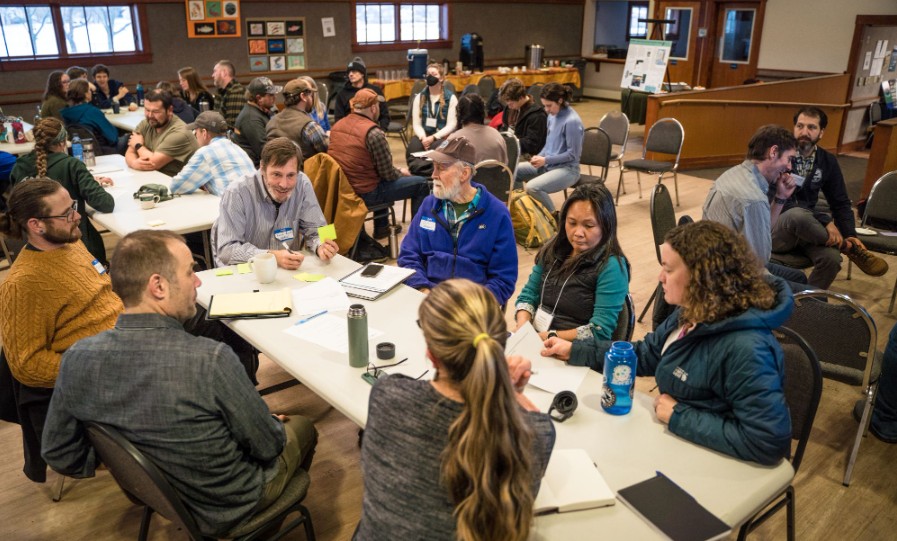
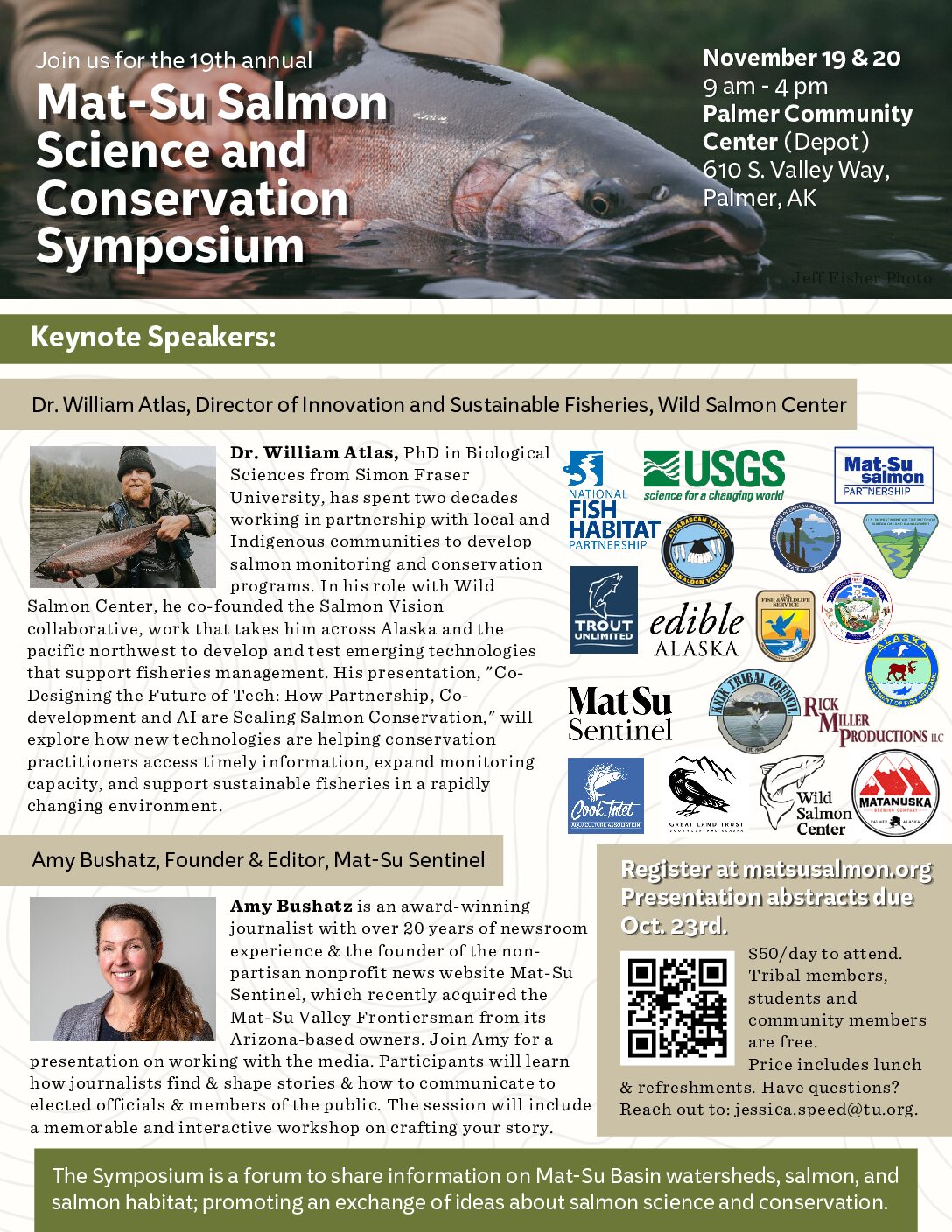
Whether you are a scientist, conservation practitioner, local leader, or simply someone passionate about wild salmon, this gathering is for you. Join around 100 others who care about Mat-Su salmon to share information, spark new collaborations, and celebrate the Matanuska and Susitna River watersheds. See event flyer, Agenda and Program.
Symposium Giveaway: The first 20 registrants to attend the Symposium will receive a complimentary 16 oz. stainless steel mug featuring the Partnership’s logo. Mugs will also be available for purchase at the Symposium for $10 each, while supplies last.
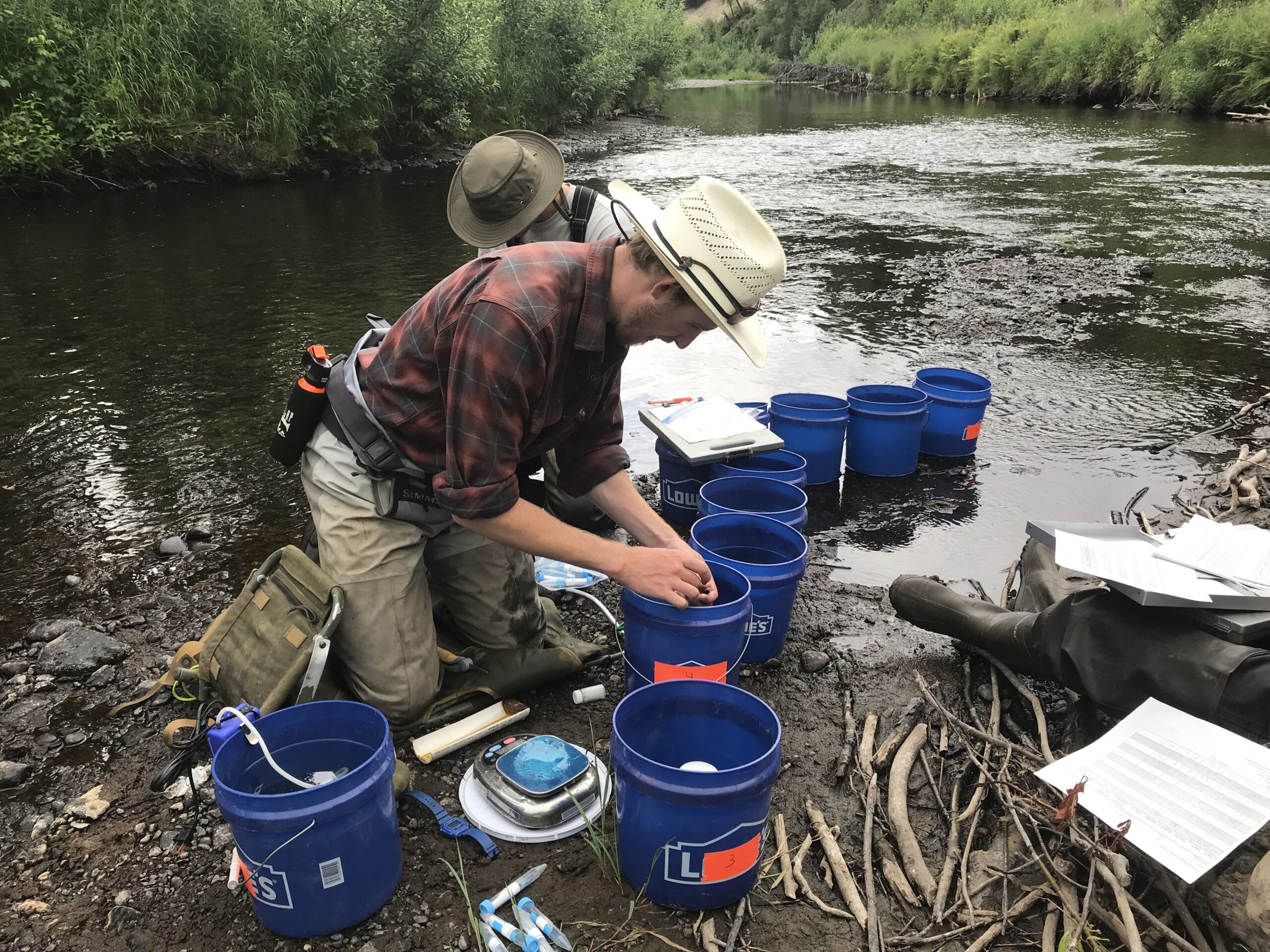
Got compelling research, a successful restoration project, or fresh insight to share with the community? There is still room for poster presentations and 3-minute “tidbit” updates.We welcome diverse perspectives and topics related to salmon and their habitat in the Mat-Su. Read presenter guidelines for more details, and reach out to jessica.speed@tu.org if you’d like to share a poster.
NEW! We are excited to announce an evening social Thursday, November 19 from 4-7pm at the Matanuska Brewing Company, 513 S. Valley Way! Palmer. Come visit with colleagues, opening day keynote speaker Will Atlas, and new and old friends. The Mat-Su Salmon Partnership is providing appetizers, and a cash bar will be available till 7pm, when the social ends.
Meet this year’s featured speakers:
Dr. William Atlas has spent two decades working in partnership with local and Indigenous communities to develop salmon monitoring and conservation programs. He serves as Wild Salmon Center’s director of Innovation and Sustainable Fisheries, and is co-founder of the Salmon Vision collaborative, a mission-driven AI company co-developing AI tools for salmon conservation and management alongside conservation practitioners from Alaska to California. He holds a PhD in Biological Sciences from Simon Fraser University where he was supported by a Hakai Research Fellowship and worked closely with the Heiltsuk First Nation to develop the Koeye River weir, a community-led project now entering it’s 15th season of operation. Currently he serves as the Central Coast First Nations representative on the Pacific Salmon Commission’s Northern Panel, as well as a member of the Central Coast Management Council’s coho technical working group and population benchmarks subcommittee. He is lead or coauthor on more than 25 peer reviewed research papers spanning diverse topics including fisheries co-governance, salmon ecology and population dynamics, and the application of AI in salmon conservation. His presentation, “Co- Designing the Future of Tech: How Partnership, Co-development and AI are Scaling Salmon Conservation,” will explore how new technologies are helping conservation practitioners access timely information, expand monitoring capacity, and support sustainable fisheries in a rapidly changing environment. You can hear his talk at 9:30am Thursday, November 19th.
Amy Bushatz is the founder, editor and reporter for the Mat-Su Sentinel, a nonprofit and nonpartisan news website covering the Matanuska-Susitna Valley (Mat-Su). Amy and her family moved to Mat-Su in 2016 following her husband’s active-duty Army service. A journalist with more than 20 years of news writing and editing experience, Amy launched the Mat-Su Sentinel in 2024 because she saw a gap in consistent news reporting in the region and wanted to be part of the solution. In June, the Sentinel acquired the Mat-Su Valley Frontiersman from its out-of-state owners. Amy holds a master’s degree in public service from the University of San Francisco and is a 2019 graduate of the George W. Bush Institute’s Stand-To Veteran Leadership Program.
Join Amy on Friday November 20, at 9:15am, for Behind the Story: How Reporters Make News, and You Can, Too. How do reporters find stories, gather information and decide what the public needs to know? And how can you get your work in front of them? Participants will learn how reporters identify stories, ask questions, evaluate information and decide what reaches the public. She’ll also share what makes information land with reporters, decision-makers and the public: turning complex data into what it means for people’s lives, and why polite persistence gets results.
On Friday November 20, at 11am Amy will offer a 45 minute workshop called On the Spot: Practicing How to Communicate with the Media. In this hands-on session, Amy Bushatz will put the ideas from her keynote into practice. Working in small groups, participants will take on a lighthearted but very Alaska scenario, identify their key messages and develop three clear talking points. Then they’ll step up to the microphone for a mock interview with Amy playing the reporter. Along the way, participants will practice making complex information accessible, staying focused on what matters most and keeping their cool when the questions are unexpected or the topic is controversial. Because a reporter is a gateway to the public, these skills apply just as well to elected officials, community members and anyone else who needs to understand your work.
We are so excited to share these amazing presenters with you!!
Cost: To assist in cost recovery for hosting the Symposium, registration is $50/person/day. Tribal members, students and community members are free. There are also additional scholarship opportunities. If cost would prohibit attendance, please reach out. We want to ensure the Symposium is as accessible as possible. Price includes lunch & refreshments.
Have questions? Contact jessica.speed@tu.org. Thank you to our generous Symposium supporters shown on the flyer!
*Flyer banner photo credit: Jeff Fischer, Alaska Department of Environmental Conservation.